

Most of us are a little too obsessed with what’s happening above the growing medium.
A new leaf? Great. A yellow one? Immediate concern. No new growth for a few weeks? Something must be wrong.
Meanwhile, the roots barely get a second thought.
That’s a problem because good root care isn’t just about rescuing a plant once its roots are damaged. It’s about creating the right conditions before things get to that point.
And surprisingly, roots don’t need anything complicated. They need enough water without sitting in it, oxygen around the root zone, room to grow, access to nutrients, and a growing environment that supports the biological activity happening around them.
The difficult part is keeping all of those things in balance.
Water too often and you can reduce the air available around the roots. Let the growing medium become dense and compacted, and roots have a harder time growing through it. Keep adding nutrients without paying attention to the root zone itself, and you may be focusing on the wrong part of the problem entirely.
So, instead of waiting for your plant to start complaining through its leaves, it makes much more sense to take care of what’s happening underneath them.
This guide covers exactly how to do that, from watering and growing-medium structure to nutrient uptake, beneficial microbes, seasonal care, and the root problems worth catching early.
Because healthier roots aren’t built with one miracle fix. They’re built by getting the basics right and, more importantly, keeping them right.
First, Know What You’re Caring For: The Plant Root System
Before getting into how to build healthy plant roots, it helps to know what you’re actually working with.
A plant root system isn’t one big root sitting under the soil doing all the work. It’s a network, and different parts of that network have slightly different jobs. You don’t need to memorize plant anatomy to take better care of your roots, but knowing the basics makes everything else a lot easier to understand.
Main roots, lateral roots, and fine feeder roots
The larger roots give the root system its basic structure. From those, smaller lateral roots branch outward and help the plant explore more of the soil around it.
Then you have the much finer roots, including the tiny root hairs that dramatically increase the surface area available for water and nutrient absorption.
That last part matters. When you’re trying to grow stronger roots, bigger isn’t automatically better. A plant also needs an active network of smaller roots that can actually interact with the soil around them.
New roots vs. established roots
Not every root on a plant is at the same stage.
Newer roots are actively extending the root system into fresh areas of soil, while older, established roots form part of the plant’s existing underground network. Together, they create a root system that continues to change as the plant grows.
And that’s really all the anatomy you need for now.
The more useful question is what kind of environment that root system is growing into. Because if you want healthy roots naturally, taking care of the space around them is where things start getting interesting.
The Root Zone Matters as Much as the Roots
Now that you know your way around the plant root system, there’s one small shift that makes root care a whole lot easier: stop looking at the roots as the only thing you need to fix.
Look at their growing conditions instead.
For healthy plant roots, five things need to stay in balance:
Moisture + Air + Growing Environment + Biology + Available Nutrients
Think of these as the five moving parts of root health. Moisture determines whether roots have reliable access to water. Air keeps the root zone oxygenated. Soil structure gives roots room to spread. Biology keeps important processes happening in the soil. And nutrients need to be in a form and place the plant can actually access.
The key word here is balance.
More of something isn’t automatically better. More water can backfire. More nutrients aren’t always useful. Even great soil on day one can change as it settles, compacts, and moves through months of watering.
So, building stronger roots naturally isn’t really about chasing the “perfect” amount of any one thing. It’s about noticing when one part of the root zone starts throwing the others off.
Water is usually where that balancing act gets interesting, so we’ll start there.
Build the Right Moisture Environment for Roots
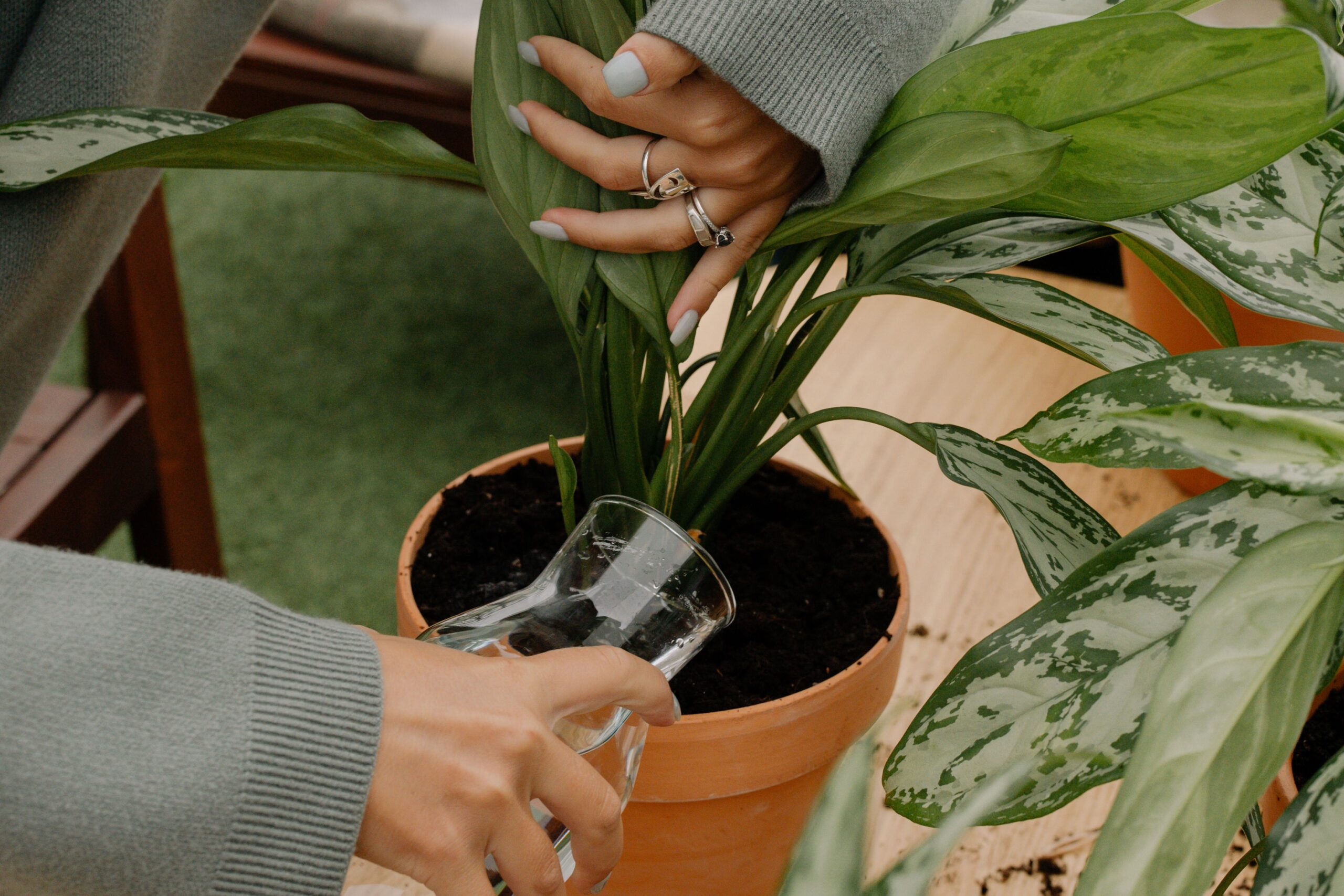
Watering sounds like the easy part of plant care. Add water when the soil gets dry, move on with your day.
But knowing when to water and how much to give isn’t always that straightforward.
The goal isn’t simply to give your plant enough water. It’s to keep moisture available where the roots can reach it without leaving the root zone soaked for longer than the plant can handle. For healthy plant roots, that middle ground matters.
Moist soil and waterlogged soil are not the same thing
Moist soil still has space for both water and air. Waterlogged soil stays so saturated that those air spaces remain filled with water.
And this is where “I watered it, so why does it look worse?” starts making a little more sense.
The surface can also be misleading. It may look dry while the soil farther down is still holding plenty of moisture. Watering again based only on what you see on top can keep the root zone wetter than you realize.
If you’re dealing with that exact situation, our guide on [plant leaves turning yellow even after watering] breaks down why it happens and what to check next.
Water the soil the roots are actually growing in
A quick splash across the surface may make the soil look watered, but that doesn’t tell you how much moisture reached the active root zone.
When you water, aim to wet the growing medium thoroughly and evenly rather than repeatedly giving small amounts to the surface. This encourages water to move through more of the soil instead of keeping the same shallow layer damp.
Check the soil before you water again
This is one habit worth stealing from experienced plant owners: check first, water second.
Stick a finger into the growing medium rather than judging by the surface alone. For deeper pots, a wooden skewer or chopstick can give you a better idea of what’s happening farther down. You can also lift smaller pots and learn how they feel when freshly watered versus when they’re getting dry.
For container plants, make sure drainage openings are working and empty runoff left in saucers or decorative outer pots. If the growing medium stays wet much longer than expected, look at the container, drainage, and medium rather than assuming watering frequency is the only issue.
Your plant doesn’t know it’s Watering Wednesday
A fixed watering schedule is convenient for us. Plants, unfortunately, did not agree to it.
A small plant in a large pot can use water very differently from a mature plant filling the same container. Bright light and warm weather can speed up moisture loss, while cooler temperatures, lower light, and higher humidity may slow it down. The growing medium, pot material, season, and stage of growth all change the equation too.
That’s why a routine that worked perfectly a few months ago may suddenly stop making sense.
If you want stronger roots and better root health, let the soil and plant tell you when it’s time to water rather than making Tuesday at 6 p.m. the boss.
The schedule can be your reminder to check. The soil gets the final say.
🌱 Thryve Tip: Let your watering schedule remind you to check the soil—not automatically water it.
Give Roots Room to Breathe
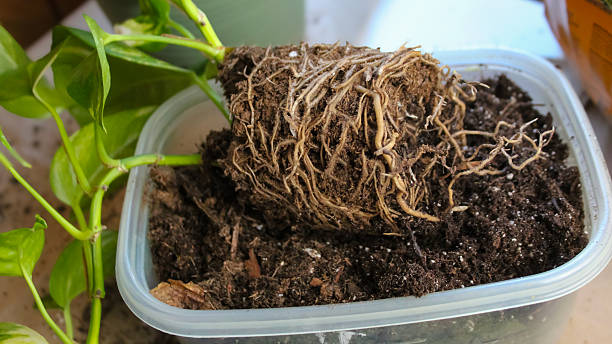
Once you’ve got moisture under control, pay attention to what needs to share that space with it: air.
Good root-zone aeration doesn’t mean the growing medium needs to be loose and fluffy at all times. It simply means there are enough pore spaces for air to move in as excess water moves out. That balance becomes harder to maintain when the medium packs down.
Watch for compaction
Over time, a growing medium can become denser and leave less space for air and water to move around the roots. When that happens, roots may struggle to spread through the pot and the medium can stay wet unevenly.
One easy sign to watch for is a change in how the pot absorbs water. If water suddenly sits on the surface, runs down the sides instead of soaking in evenly, or the growing medium feels unusually hard, compaction may be part of the problem.
Gently loosen the top layer where appropriate, and if the entire root zone has become dense or poorly draining, it may be time to repot into a fresher, better-aerated growing medium.
The goal is to give roots enough structure to stay supported without packing the root zone so tightly that air, water, and new root growth have nowhere to move.
Read the guide: How to Fix Compacted Soil and Improve Root Health
Check where excess water is actually going
A drainage hole existing and a drainage hole working are two different things.
Roots, old growing medium, or debris can partially block openings over time. Decorative outer pots and saucers can also collect runoff that gets forgotten after watering.
For container plants, make it a habit to check that excess water can leave freely and empty anything left sitting underneath the pot. It’s a small thing, but it makes managing root health considerably easier.
🌱 Thryve Tip: If the root zone is already wet, more water isn’t more hydration. Check below the surface first.
Create a Growing Environment Roots Can Actually Move Through
Roots need water and air, but they also need somewhere to go.
As the plant root system develops, new roots spread into the growing medium looking for moisture, nutrients, and space. The easier that soil is to move through, the more room roots have to branch out and explore.
Roots need room to move
A good growing medium needs a bit of balance. It should be structured enough to support the plant, but not so dense that new roots have to fight their way through it.
As the growing medium becomes tightly packed, the spaces roots can grow into become smaller. That can restrict how freely the root system expands, especially those finer, actively growing roots.
You don’t need a perfectly fluffy growing medium, either. In fact, fluffy isn’t really the goal.
Think workable: enough structure to support the plant and hold useful moisture, with enough open space for roots to keep moving through it.
We’ve already covered compaction from an airflow perspective. Here, the important thing to remember is simpler: stronger roots need somewhere to grow.
Organic matter can help support soil structure
In soil-based growing environments, organic matter can support soil structure by helping particles form aggregates and creating a better mix of spaces for water, air, and roots.
And no, the goal isn’t to keep adding organic material until the growing medium feels like a pillow.
You’re looking for an environment that holds useful moisture while still giving healthy plant roots room to spread.
The growing medium you started with won’t stay that way forever
Fresh potting mix gets plenty of attention on repotting day. Six months later? Not so much.
But container growing media change over time.
Repeated watering causes particles to settle. Organic components gradually break down. Meanwhile, the roots themselves take up more and more of the available space.
So the growing medium that worked perfectly when you first planted may eventually behave differently.
Every so often, pay attention to the root environment itself. Has it become noticeably denser? Does water move through it differently? Is there still enough growing medium around the roots?
You don’t need to replace it just because it has been there for a while. But you do want to notice when its physical condition starts changing.
🌱 Thryve Tip: A good growing environment shouldn’t make roots fight for every inch. Give them structure, air, and somewhere to grow.
Support the Living Ecosystem Around Your Roots
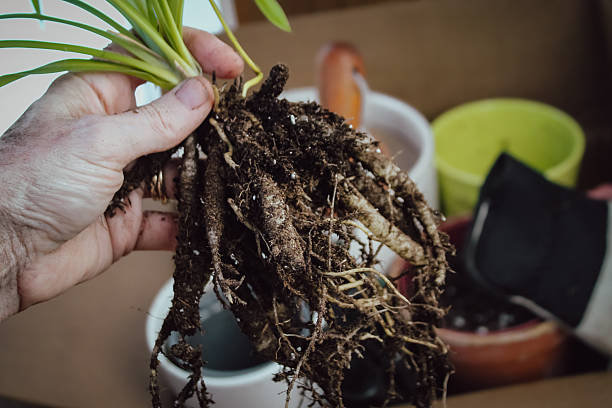
We’ve covered water, air, and the physical growing environment. Now for the part of root health that’s easy to forget because, well, you can’t exactly see it.
In soil and other biologically active growing media, bacteria, fungi, and other microorganisms live around the plant root system, where they take part in processes that affect the root zone and how nutrients move through it.
You don’t need to know every microbe by name. Your plant certainly doesn’t. But you should know what kind of environment helps that underground community do its thing.
Meet the rhizosphere
The rhizosphere is the thin area of soil directly influenced by plant roots.
It’s basically a very busy neighborhood.
Roots release compounds into the surrounding soil, microorganisms gather around them, organic material gets broken down, and nutrients move through different forms within the soil.
For plant care, the important part is simple: roots aren’t working in an empty pot. There’s an entire biological system operating right alongside them.
Roots and microbes are neighbors for a reason
Some beneficial microbes help break down organic material and take part in nutrient cycling. That can influence how nutrients become available around the roots.
And the relationship goes both ways. Roots also influence the microbial community living around them.
You don’t need to manage all of this with a microscope. Thankfully.
Keep the underground crew happy
A few basics go a long way:
- Keep moisture balanced. Soil biology needs moisture, but permanently soggy soil creates a very different environment.
- Leave room for air. Good soil structure helps air and water move through the root zone.
- Support organic matter where appropriate. It contributes to the growing environment and gives decomposers material to work with.
- Go easy on the “more must be better” approach. Your plant does not need a new intervention every time one leaf looks suspicious.
- Think long term. Building stronger roots is more about maintaining good conditions than constantly trying to correct them.
Nothing on that list is particularly fancy. That’s good news.
Feeding the plant and improving the soil are two different things
Here’s where plant care gets mixed up pretty often.
If growth slows, the immediate thought is usually: It needs food.
Maybe. But not always.
Fertilizer supplies nutrients. Improving the soil is about creating better conditions around the roots and those aren’t quite the same job.
If the root zone is compacted, constantly soggy, or otherwise out of balance, adding another round of nutrients doesn’t fix those conditions. You’re adding more to the soil without first asking whether the plant root system is in a good position to use it.
So before reaching for fertilizer, take a quick look at what’s happening below the surface.
Is the soil holding too much water? Has it become dense? Is there enough air movement? Are you supporting a biologically active growing environment?
Sometimes the plant really does need nutrients. Other times, the soil needs your attention first.
Help Roots Access Nutrients More Effectively
Having nutrients in the growing environment is one thing. Having nutrients your plant can actually use is another.
That’s an important distinction, because when a plant isn’t growing the way we expect, the usual response is to add more fertilizer. Sometimes that makes sense. Sometimes there’s already plenty there.
Nutrient supply and nutrient availability aren’t the same thing
Nutrients can be present without all of them being readily available to the plant at that moment.
Availability can be influenced by conditions within the root zone, including moisture, chemistry, biological activity, and the health of the roots themselves. So a nutrient-rich growing medium doesn’t automatically mean the plant root system has equal access to everything in it.
The better question isn’t always How much is there?
It’s How much can the plant actually use?
A healthy root system has more to work with
This is where root health earns its keep.
A well-developed root system can spread through more of the growing medium, giving it more opportunities to come into contact with available nutrients. Fine roots and root hairs add even more surface area for that exchange.
If root growth is restricted, though, simply adding more nutrients doesn’t give those roots more room to explore.
Check the root zone before reaching for fertilizer
If your plant seems like it needs a nutrient boost, ask:
- Is the root zone staying unusually wet or dry?
- Has the growing medium become dense or compacted?
- Do the roots have enough room to grow?
- Is the plant actually showing signs that point to a nutrient deficiency?
If the root environment looks good and the plant genuinely needs additional nutrients, feeding may be the right next step.
But if something below the surface is off, adding more fertilizer can end up answering a question your plant wasn’t asking.
Basically, fertilizer has a job. It just can’t do everyone else’s job too.
🌱 Thryve Tip: Before adding more nutrients, ask whether your roots can actually use what’s already available.
Know When Roots Need More Space
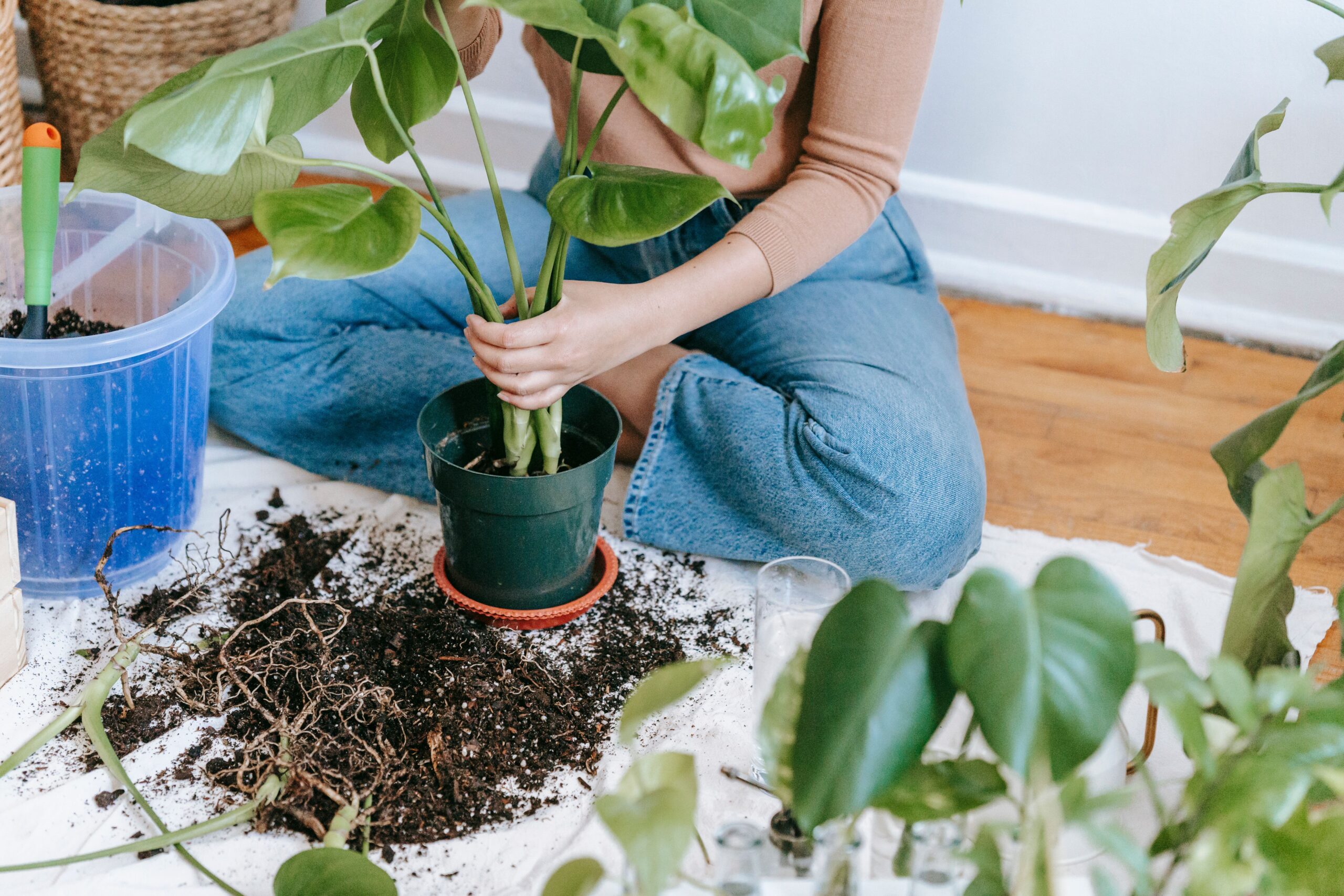
Plants grow. Roots do too.
That sounds painfully obvious, but it’s easy to forget when everything is happening inside a pot you haven’t looked into since repotting day.
As a plant root system develops, roots gradually spread through the available growing medium. Eventually, some plants reach a point where there’s a lot more root than available space.
That doesn’t mean you need to upgrade the pot every time you spot a root. But it does mean space is another part of root health worth keeping an eye on.
How roots use available container space
Inside a container, roots can only travel so far before they meet the sides and bottom of the pot. From there, they may begin growing around the inside of the container and through the remaining pockets of soil.
Some visible roots are completely normal. A root poking through a drainage hole isn’t an automatic emergency.
What matters is how much usable growing medium is left and whether the roots have become excessively crowded.
Signs the root system may be running out of room
Look at what’s happening inside the pot rather than relying on one clue. You may find:
- Roots densely circling the inside of the container
- A tight mass of roots around the outside of the root ball
- Very little loose growing medium remaining between roots
- Roots repeatedly growing through drainage holes
- A root ball that holds the exact shape of the pot when removed
The keyword here is crowded.
One adventurous root escaping through the bottom does not mean your plant is begging for a bigger apartment.
Inspect when you have a reason
Pulling a perfectly happy plant out of its pot every few weeks to “check” can create more disturbance than useful information.
Inspect the root ball when the plant has been in the same container for a long time, water begins moving through differently, or visible root growth suggests the available space may be running out. Slide the plant out gently and look at how the roots and growing medium are distributed.
When repotting helps and when it doesn’t
If the root ball is genuinely crowded, moving the plant into a slightly larger container can give healthy plant roots fresh space to expand into.
But repotting isn’t a universal fix. If the real problem is poor watering, a dense growing medium, damaged roots, or another root-zone issue, a new pot does not automatically solve it. You still need to correct the condition causing trouble.
And avoid jumping into a dramatically larger pot. A small plant root system surrounded by a large volume of growing medium may not use moisture quickly enough, leaving the root zone wet for longer than expected.
Size up gradually. Give the roots more room without giving them an entire zip code.
🌱 Thryve Tip: One root through a drainage hole isn’t an eviction notice. Check for actual crowding before you repot.
Protect Roots During Repotting and Transplanting
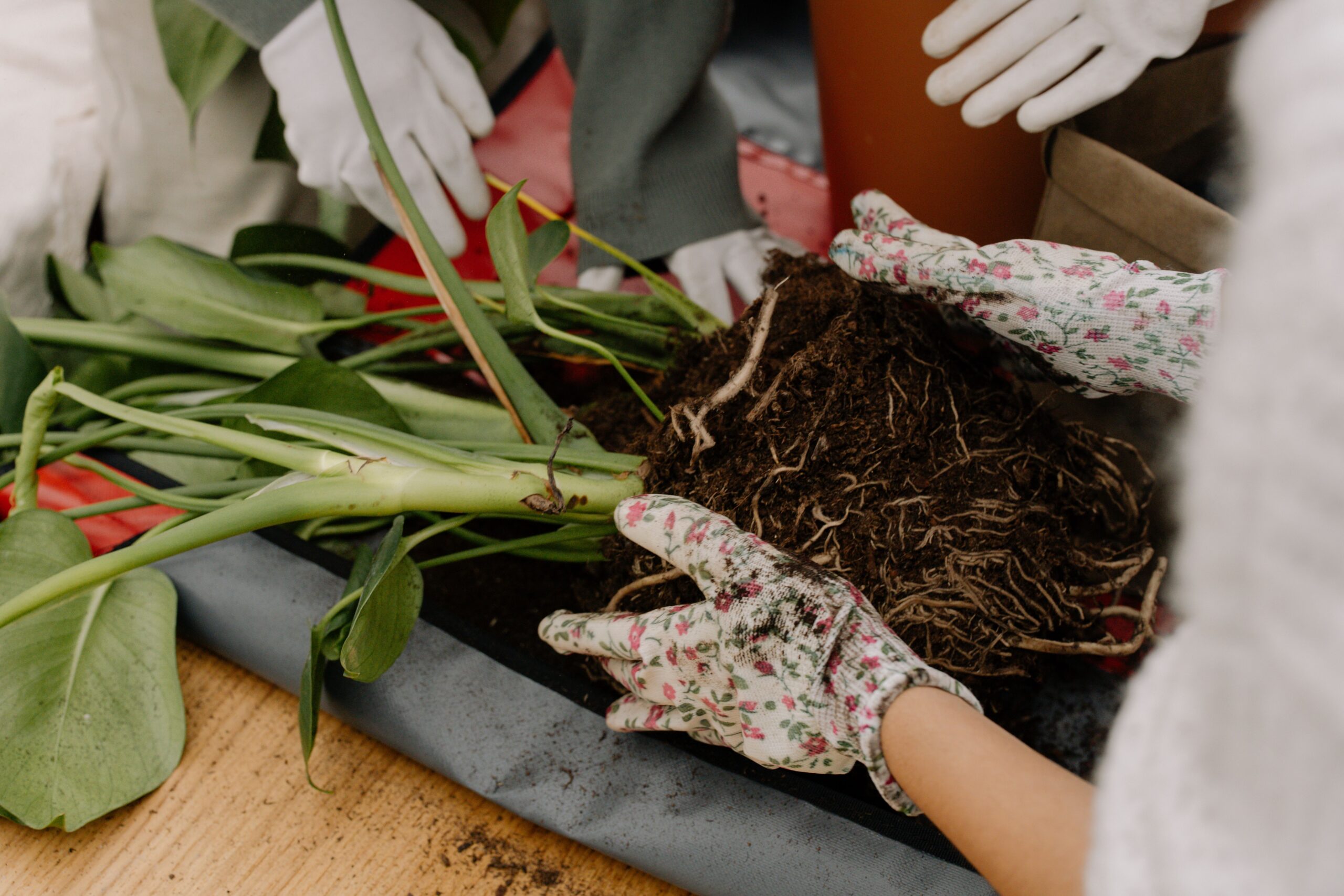
Repotting gives plant roots fresh space to grow, but there’s a catch: getting there can be a little rough on them.
Fine, actively growing roots are easy to damage, and the plant also has to adjust to an entirely new root environment afterward. So this is one of those times when doing less is often the smarter move.
A quick root-friendly repotting checklist
- Prepare the new pot and soil first. Have everything ready before taking the plant out of its current home.
- Handle the root ball gently. Loosen crowded roots only when necessary instead of pulling the whole thing apart.
- Be extra careful with fine roots. Those tiny roots play an important role in water and nutrient uptake.
- Keep roots from sitting exposed for too long. Move the plant into its new growing environment once you’re ready.
- Water based on the plant and new soil conditions. Don’t automatically drown it as a “welcome home” gift.
- Give it time. Freshly transplanted roots need a chance to establish before you start changing five other things about the plant’s routine.
A little disturbance during repotting is sometimes unavoidable. The goal isn’t to keep every single root perfectly untouched. It’s to avoid turning a simple pot upgrade into a full root renovation.
Adjust Root Care With the Seasons
Light, temperature, growth rate, and moisture use change throughout the year, which means root care needs a few seasonal adjustments too.
| Season | Quick root check |
|---|---|
| 🌱 Spring | Check soil condition, root space, and whether watering needs to increase as growth picks up. |
| ☀️ Summer | Keep a closer eye on moisture. Soil may dry faster, but check before automatically adding more water. |
| 🍂 Fall | As growth slows, reassess how often you’re watering instead of carrying your summer routine straight into fall. |
| ❄️ Winter | For plants growing more slowly, soil may stay wet longer. Check the root zone before reaching for the watering can. |
The rule is pretty simple: don’t put plant care on autopilot. What worked for healthy plant roots in July may be way too much in January.
The Healthy Root Checklist
Healthy root care doesn’t need to turn into another complicated plant routine. If you can check most of these boxes, you’re covering the things that matter:
- Water reaches the root zone, not just the surface
- Growing medium isn’t staying constantly saturated
- Excess water can drain freely
- Growing medium has enough pore space for air
- Roots have room to grow and expand
- The growing medium hasn’t become overly compacted
- The root zone environment supports biological activity
- You check the growing medium instead of watering purely by calendar
- Watering changes as the plant grows and seasons shift
- Roots are handled gently during repotting
- You check soil and root health before automatically adding fertilizer
- Root problems get attention early, rather than after the whole plant starts struggling
You don’t need every condition to be perfect 24/7. Plants are a little more forgiving than the internet sometimes makes them seem. The goal is simply to keep the root zone balanced enough for healthy plant roots to keep doing their job.
Better Root Care Starts With What’s Around the Roots
Here’s the nice part: keeping roots healthy doesn’t mean constantly messing with them. Actually, most of the time, it means the opposite.
Pay attention to the environment around the plant root system. Keep moisture and air in balance. Give roots enough space. Look after soil structure and biological activity. And before assuming a struggling plant needs more food, check whether its roots are in a position to use what’s already there.
That’s also the thinking behind Thryve Roots™.
Thryve Roots is an OMRI Listed organic soil amendment designed to support the root zone environment as part of a complete plant care routine. It is not a fertilizer and works alongside the basics of good root care.
Because good root health isn’t about doing more to your plant.
A lot of the time, it’s about giving the roots better conditions to do what they already know how to do.
FAQs About Building Healthy Plant Roots
How do I know if my plant has a healthy root system?
Healthy roots are generally firm and actively growing rather than soft or breaking down. You may also see finer roots branching through the growing medium. Just remember that root color and appearance vary between plant species, so don’t judge root health by color alone.
How often should I check the roots of a houseplant?
You generally don’t need to pull a healthy plant out of its pot just to inspect its roots. Check the root ball when you have a reason, such as repotting, suspected crowding, or a root-zone problem you can’t figure out from above.
Can I improve root health without repotting?
Absolutely. Repotting is useful when the plant needs more space or a change in growing medium, but plenty of root care happens without it. Improving watering habits, drainage, aeration, and the soil environment can all help.
Does adding fertilizer help weak roots?
Only if the plant actually needs the nutrients it provides. If poor soil conditions, moisture problems, or limited root function are getting in the way, adding more fertilizer doesn’t fix those issues.
What kind of soil environment supports healthy roots?
Aim for soil that holds useful moisture while still allowing excess water to drain and air to move through it. It should give roots room to expand while supporting biological activity and nutrient availability.
How do I protect roots when repotting?
Prepare everything first, handle the root ball gently, avoid unnecessarily tearing apart fine roots, and give the plant time to establish afterward. Repotting should be a move, not a demolition project.
Does root care change in winter?
For many plants, yes. Slower growth, lower light, and cooler conditions can mean the soil dries more slowly. Instead of carrying your summer watering schedule straight through winter, check what the root zone actually needs.
Want to Understand Your Roots Better?
Root problems are easier to manage when you know what to look for. Our FREE Healthy Roots Handbook gives you a practical guide to spotting root stress, troubleshooting common problems, and building healthier plants from the roots up.
Already part of the Thryve Roots Squad? Check your inbox – your copy is waiting for you.

Be the first to comment