

Two plants can get the same sunlight, the same amount of water, and even the same nutrients, yet one grows faster, fuller, and stronger than the other.
One reason comes down to how well their roots are working.

Roots are responsible for getting water and essential nutrients into the plant, but their influence doesn’t stop there. The size, activity, and development of a root system can affect how efficiently a plant uses those resources, how well it supports new stems and foliage, and how it responds when conditions become less than ideal.
In other words, giving a plant what it needs is only half the equation. Its roots still need to access it.
So what actually changes when a plant develops healthier, stronger roots? Quite a lot and the difference eventually shows up in almost every part of its growth.
What Do Healthy Roots Actually Do?
Healthy roots keep a plant anchored, absorb water and dissolved nutrients, and move those resources into the plant to support growth. But the real work isn’t done by the thick roots you notice first.
Much of the absorption happens through fine, actively growing roots and microscopic root hairs. These tiny extensions dramatically expand the root surface area available for contact with the surrounding growing medium, helping plants access water and dissolved nutrients.
And roots don’t stay in one place. As new roots grow through the soil or growing medium, they continuously reach new pockets of moisture and nutrients. Those resources then enter the plant’s vascular system, where water and minerals can be transported upward to support stems and leaves.
That’s why healthy root development matters for plant growth: it increases how much of the growing environment a plant can actually access.
How Do Healthy Roots Help Plants Absorb More Nutrients?
Healthy roots improve nutrient absorption by increasing how much of the growing medium a plant can explore and how many points it has for taking nutrients in.
For a broader look at what supports strong root systems overall, see our complete guide to healthy plant roots.
That matters because nutrients being present in soil doesn’t mean they’re automatically available to the plant. Most mineral nutrients must dissolve in soil water and reach the root surface before they can be absorbed.
Phosphorus is a good example. Because it moves only short distances through soil, roots often need to grow toward it. A wider network of young roots and root hairs helps the plant reach more nutrient-containing areas of the growing medium.
Once absorbed, those nutrients can be used to build new roots, stems, leaves, flowers, and fruit.
So when plant growth slows, adding more fertilizer isn’t automatically the answer. If the root system can’t effectively access what’s already available, more nutrients may not solve the actual bottleneck.
🌱 Thryve Tip: More fertilizer won’t help much if the roots can’t get to what’s already there.
How Do Healthy Roots Help Plants Use Water Better?
Healthy roots help plants reach moisture throughout more of the growing medium rather than relying only on the area immediately surrounding the main root mass.
That matters because soil rarely dries at exactly the same rate from top to bottom or from one spot to another. A well-developed root system has a better chance of reaching moisture wherever it’s still available.
Once absorbed, water moves upward through the plant, supporting stems, leaves, photosynthesis, and the pressure that helps plant cells hold their shape.
That’s where healthy root development makes a good watering routine more effective: water still has to reach an active root system before the plant can use it.
Why Do Stronger Roots Lead to Better Plant Growth?
A plant can only grow as much as its roots can keep up with.
Think about what happens every time it puts out a new leaf or grows a little taller. There’s now more plant to support, more tissue that needs water, and more growth that needs nutrients. Stronger roots make that easier by giving the plant a reliable way to keep those resources coming.
You can usually see the payoff above the soil. Stems have the support to keep developing, new leaves have what they need to grow, and the plant is less likely to give you one exciting burst of growth followed by… absolutely nothing.
There’s a physical side to it, too. Roots anchor the plant in place, which becomes increasingly important as stems get taller and foliage gets heavier.
It’s why healthy root development and healthy plant growth tend to go hand in hand. The leaves may get all the attention, but they’re not exactly doing this alone.
🌱 Thryve Tip: Don’t just count new leaves. Growth is healthier when the roots can keep up with them.
How Do Healthy Roots Help Plants Recover From Stress?
Healthy roots won’t stop a heatwave, make a freshly repotted plant forget it was just moved, or magically keep growing conditions perfect. What they can do is give the plant more to work with when those conditions change.
Take a hot day. Leaves can lose water faster, which means the plant suddenly has more demand to meet. Our guide to how healthy roots handle summer stress takes a closer look at what happens below the soil during peak heat. Or after repotting, some roots may have been disturbed just as the plant is trying to settle into a completely new environment.
A well-developed root system gives the plant a wider area to draw water and nutrients from during those moments. That extra access can help it maintain normal functions and support recovery rather than putting all its energy into simply keeping up.
The same principle applies when moisture levels fluctuate, temperatures shift, or a plant enters a period of rapid new growth.
So healthy roots don’t make plants stress-proof, if only plant care were that convenient. They simply give plants a stronger starting point for adapting, recovering, and getting back to healthy plant growth.
🌱 Thryve Tip: After stress, keep things boring for a bit. Stable conditions give roots time to recover.
Why Do Healthy Roots Matter for Long-Term Plant Growth?
Healthy roots help plants keep up with their own growth. As more leaves and stems develop, the plant has more tissue to maintain and a bigger demand for water and nutrients.
There’s a reason roots and top growth develop together. In trees, for example, Iowa State University Extension explains that as a tree grows above ground, its root system needs to expand too. Under normal conditions, roots may weigh only about one-fifth to one-sixth as much as the growth above ground, but they still have the job of supporting that much larger plant.
Your houseplant obviously isn’t trying to become an oak tree, but the same relationship matters. New roots extend the area a plant can draw water and nutrients from as the foliage above gets larger.
That’s also why a sudden explosion of new leaves isn’t the only measure of healthy plant growth. Consistent root development helps a plant establish, support new foliage and stems, and keep growing without running out of steam a few weeks later.
How Can You Encourage Healthy Root Development?
The best way to support healthy root development is to give roots the right balance of oxygen, moisture, space, and access to nutrients. You don’t need an elaborate routine; getting those growing conditions right usually matters more.
Give Roots Enough Oxygen
Roots need oxygen as well as water. Use a growing medium that drains well for your plant, and avoid letting the root zone stay waterlogged for long periods. You want moisture around the roots, just not at the expense of airflow.
If the mix feels dense or stays soggy, check for common soil problems affecting root growth before changing your watering routine.
Water the Entire Root Zone
Wet soil on top doesn’t always mean the roots below got enough water. Water thoroughly enough to reach the full root zone, then wait to water again based on what your plant needs and how quickly its growing medium dries.
Give Growing Roots Enough Space
Roots need room to keep branching and spreading. If they’re tightly circling the container or filling most of the available space, it may be time to repot. A slightly larger container gives new roots a fresh growing medium to explore without giving them more space than they can comfortably use.
Don’t Rely on Fertilizer Alone
Adding more fertilizer won’t automatically produce stronger growth. Nutrients still need to be available in the growing medium and accessible to the roots before the plant can use them.
If the root environment isn’t working well, simply adding more nutrients may not solve the actual problem.
Support the Soil Around the Roots
Roots can only work with the environment they’re growing in. When that environment supports biological activity and helps keep nutrients available within the root zone, roots are in a better position to access what the plant needs.
That’s also the thinking behind Thryve Roots™. It is an OMRI Listed organic soil amendment designed to support the soil and root-zone environment as part of a complete plant care routine. It is not a fertilizer and doesn’t replace proper watering, drainage, light, or nutrition.
Instead, Thryve Roots™ is intended to support conditions around the roots, including the biological activity within that environment, so the root zone can function as part of a healthy growing system. The goal isn’t simply to add more nutrients, but to support the environment where roots interact with the growing medium and access what’s already available.
Because sometimes better root health isn’t about giving your plant more. It’s about helping the roots make better use of what’s already there.
How Can You Tell If Healthy Roots Are Supporting Plant Growth?
You usually won’t see healthy roots unless you’re repotting, but you can get a pretty good idea of how they’re doing by watching what happens above the soil.
The biggest clue is consistency. Maybe your plant puts out a new leaf, then another a few weeks later. The stems continue growing, the foliage develops normally, and that new growth doesn’t suddenly come to a halt. That tells you more than one unusually fast growth spurt ever could.
Repotting is another good time to pay attention. It’s normal for growth to slow while a plant settles into its new pot. Once the roots begin establishing in the fresh growing medium, you should eventually see growth pick up again.
Of course, roots don’t get all the credit. A plant sitting in poor light isn’t going to take off just because its roots are healthy, and some species simply grow slower than others. Temperature, watering, nutrients, light, and the time of year all affect plant growth.
So don’t worry about whether your plant is growing fast. Pay attention to whether it keeps growing well.
🌱 Thryve Tip: Take a photo every few weeks. Steady growth is much easier to notice when you can compare.
Frequently Asked Questions About Healthy Roots and Plant Growth
Do bigger roots mean a healthier plant?
Not necessarily. You’re looking for a root system that’s healthy and appropriate for the size of the plant, not simply the biggest one possible. Roots should be actively growing and able to move through the growing medium without being packed tightly into the container. A huge mass of circling roots can actually mean the plant has run out of room.
What do healthy plant roots look like?
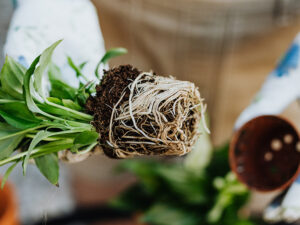
For many plants, healthy roots are firm and white, cream, or light tan, with finer roots branching through the growing medium. But color isn’t a perfect test. Some species naturally have darker roots, so texture matters too. Roots that are soft, mushy, or falling apart are much more concerning than healthy roots that simply happen to be brown.
Can a plant have healthy-looking leaves but unhealthy roots?
Yes. Root problems can begin before the leaves make them obvious. A plant may still look fine for a while even if its root zone is staying too wet or the roots are beginning to struggle. If growth suddenly stalls, the soil stays wet much longer than usual, or the plant starts wilting despite moist soil, the roots are worth checking.
Do healthy roots make plants grow faster?
They can support better growth, but healthy roots don’t guarantee fast growth. A plant’s natural growth rate, light, temperature, season, water, and nutrient supply still matter. What healthy roots do is help the plant access the water and nutrients available to it, giving new growth a better chance of continuing instead of repeatedly starting and stalling.
Can too much fertilizer damage healthy roots?
Yes. More fertilizer isn’t always better. Excess fertilizer salts can damage roots and make it harder for them to take up water. If a plant isn’t growing well, increasing fertilizer before checking the roots, watering, light, and growing medium can make the original problem worse.
Should I check my plant’s roots if it stops growing?
Sometimes, but don’t pull the plant out of its pot during the first quiet week. Growth naturally slows with changes in season, light, and temperature. If growth stays stalled when conditions should support active growth especially alongside wilting, persistent yellowing, or soil that remains unusually wet, a root check can help rule out problems such as root rot or an overcrowded container.
Can healthy roots recover after repotting?
Yes, provided enough healthy root tissue remains and the plant returns to suitable growing conditions. Some slowdown after repotting isn’t unusual because disturbed roots need time to establish in the new growing medium. Rather than expecting instant new leaves, watch for the plant to stabilize first and then return to normal growth.
Want Healthier Plant Growth? Start With the Roots
Healthy growth starts with roots that can do their job. Our FREE Healthy Roots Handbook walks you through practical ways to support root development, improve the root environment, and give your plants what they need to keep growing well.
Already part of the Thryve Roots Squad? Check your inbox – your copy is waiting for you.

Be the first to comment