

When a plant starts struggling, most gardeners look at what they can see.
Yellow leaves? Maybe it needs more water. Slow growth? Maybe it needs fertilizer. Wilting? Perhaps it’s getting too much sun.
But the real problem may be happening somewhere you rarely look: below the surface.
Roots are responsible for absorbing the water and nutrients a plant needs to grow, while also helping it stay anchored and supported through changing conditions. When roots struggle, the rest of the plant often shows it first through yellowing leaves, wilting, slow growth, or poor recovery.
That’s why healthier plants don’t start with greener leaves. They start with a stronger foundation below the surface.
In this guide, you’ll learn why healthy roots matter, what a healthy plant root system actually does, and how to create the conditions roots need to support stronger, more resilient plants.
Why Roots Are the Hidden Heroes of Every Plant?
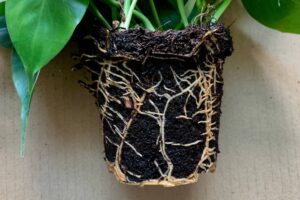
Leaves, flowers, and fruit get most of the attention because they’re the parts we can actually see. But almost everything happening above the surface depends on what’s happening below it.
A healthy plant root system works constantly behind the scenes. Roots take in water, help the plant access nutrients, anchor it in place, and interact with the growing environment around them.
When roots are healthy, plants have a stronger foundation for steady growth and recovery. When roots struggle, that support begins to break down—and the first warning signs often appear in the leaves.
That’s what makes roots so easy to overlook. You rarely see the problem starting. You only see what happens afterward.
🌱 Thryve Tip: Leaves show you how your plant is doing. Roots help explain why.
What Do Plant Roots Actually Do?
Roots may stay hidden, but they handle some of the most important jobs in your plant.
Roots Absorb Water
Every time you water your plant, the roots are responsible for taking that moisture in and moving it upward where it’s needed.
But simply having water in the soil doesn’t mean the plant can use it. If roots are stressed or the root environment is out of balance, water uptake can slow down even when the soil feels moist.
Roots Help Plants Access Nutrients
Nutrients also need to enter through the roots before the plant can use them for growth.
This is why adding more fertilizer doesn’t always fix yellow leaves or slow growth. Nutrients can be present in the growing environment, but healthy roots are what help the plant access and absorb nutrients effectively.
Roots Keep Plants Anchored
Roots provide the physical support that keeps plants stable as they grow.
As the plant becomes larger above the surface, a well-developed root system helps create the strong foundation it needs below.
Roots Interact With Soil Biology
Roots don’t work alone. In soil, they interact with beneficial microorganisms that are part of the living ecosystem around the root zone.
This biological activity helps support nutrient availability and creates a healthier environment for roots to grow and function.
That’s what makes roots so easy to overlook. You rarely see the problem starting. You only see what happens afterward.
🌱 Thryve Tip: Healthy roots don’t just hold your plant in place. They help connect it to everything it needs to grow.
Why Root Health Matters More Than You Think
Most plant care happens reactively.
A leaf turns yellow, so we change the watering schedule. Growth slows down, so we reach for fertilizer. A plant starts drooping, so we move it somewhere brighter.
There’s nothing wrong with responding to what your plant is telling you. But waiting for visible symptoms means you’re often stepping in after the plant has already been under stress for some time.
Root health takes a different approach.
Instead of asking how to fix each problem as it appears, you focus on building a strong foundation that helps the plant function better in the first place.
Healthy Roots Help Plants Use What’s Already Available
Water and nutrients can be present in the root zone without being readily accessible to the plant. If roots are stressed by poor aeration, excess moisture, compaction, or other unfavorable conditions, uptake can become less effective.
That’s why adding more water or fertilizer isn’t always the answer. Sometimes the better question is whether the root system has the conditions it needs to use what’s already available.
Root Health Influences How Plants Respond to Stress
No growing environment stays perfect forever.
Temperatures change. Watering gets delayed. Plants are transplanted. Containers heat up. Outdoor gardens go through dry periods, heavy rain, and changing seasonal conditions.
Healthy roots can’t prevent those things from happening, but they give plants a stronger foundation for handling summer stress and changing conditions.
A well-developed root system can explore a larger area for available moisture and nutrients. Healthy, functioning roots can also continue supporting the plant as it adjusts to changing conditions.
That doesn’t make a plant stress-proof.
It simply means the plant has a stronger system supporting it when stress arrives.
Root Health Is About the Long Game
It’s easy to judge plant health by what looks good today.
Green leaves feel like success. New growth feels even better.
But long-term plant health is about more than what’s happening this week.
A plant needs a root system capable of supporting the growth it continues to produce. As the plant becomes larger above the surface, the demand placed on the roots increases too.
That’s why root health should be part of regular plant care—not an emergency measure you only think about when something goes wrong.
Water thoughtfully. Protect the root environment. Give roots oxygen and room to grow. Pay attention to what’s happening below the surface before symptoms become severe.
Because when the foundation is healthy, everything growing from it has a better place to start.
What Do Healthy Plant Roots Look Like?
Healthy roots won’t look exactly the same on every plant, but there are a few signs that can tell you whether your root system is doing well.
Healthy roots are generally firm, actively growing, and spreading through the available growing space. They shouldn’t feel soft or mushy, and the root zone shouldn’t have a strong, unpleasant smell.
Struggling roots, on the other hand, may appear soft or deteriorated, have limited new growth, or become tightly packed with little room to expand. Constantly waterlogged or compacted conditions can also make it harder for roots to function properly.
Quick Root Check
When you’re repotting or inspecting a plant, ask yourself:
✓ Do the roots feel firm rather than mushy?
✓ Can you see signs of new root growth?
✓ Do the roots have enough room to expand?
✓ Does the root zone drain without staying constantly saturated?
✓ Does everything smell fresh rather than rotten or sour?
The goal isn’t to have “perfect-looking” roots. It’s to create an environment where they can continue growing and doing their job.
Why Gardeners Overlook Roots
If roots are this important, why do so few gardeners think about them?
The simple answer is that roots are invisible. Gardening is a visual hobby. We check on our plants by looking at them, and everything we can see happens above the soil line. Leaves tell us if a plant is thirsty. Flowers tell us if a plant is healthy. Fruit tells us if a plant is productive.
Roots don’t offer that same immediate feedback. You can’t glance at a plant and know whether its root system is thriving or struggling. By the time root problems show up above the surface, wilting, yellowing, stunted growth, slow recovery from stress, the issue has often been developing underground for weeks.
This creates a common pattern in gardening: gardeners treat the symptom (a drooping leaf, a pale plant) without addressing the actual cause (a weak or compromised root system). It’s a bit like refilling a flat tire with air every day instead of finding the leak. The visible problem may temporarily improve, but the underlying issue keeps coming back.
That’s why shifting your attention below the surface, even occasionally, can make such a dramatic difference in how your plants perform.
Quick Self-Check
✓ Do your plants respond to fertilizer, but only for a short time?
✓ Do you find yourself watering more, but seeing little improvement?
✓ Do plants recover slowly after stress like heat, transplanting, or pests?
If you answered yes to any of these, it may be time to look at what’s happening below the soil rather than only treating what you see above it.
The Connection Between Roots, Soil, and Long-Term Plant Health
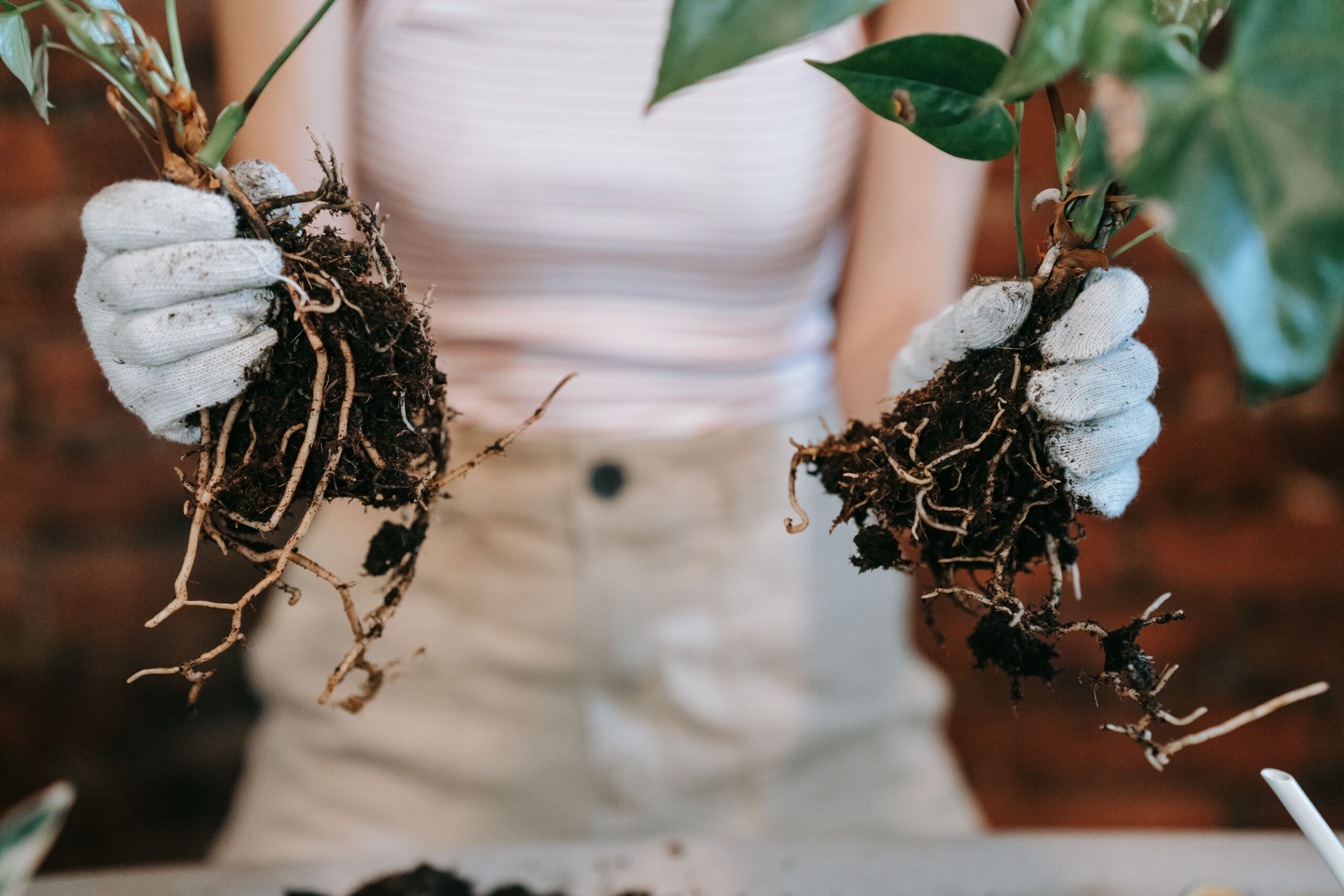
Healthy roots don’t grow in isolation. They’re constantly responding to the environment around them.
That environment is the root zone: the space where roots interact with moisture, oxygen, nutrients, growing media, and biological activity. Whether a plant is growing in garden soil, a container mix, or another suitable growing environment, conditions around the roots can influence how well they develop and function.
Root health, then, isn’t only about the roots themselves. It’s about creating an environment that allows them to do their job.
Roots Need Water and Oxygen at the Same Time
It sounds almost contradictory, but healthy roots need access to both moisture and air.
In many growing environments, water and air share the pore spaces surrounding the roots. When those spaces remain saturated for too long, oxygen availability can decrease and normal root function may be affected.
Go too far in the opposite direction and you have another problem. If the root zone repeatedly dries out too much, roots lose consistent access to the moisture the plant needs.
This is why good watering isn’t simply about giving a plant “enough” water.
It’s about creating a root environment where moisture is available without keeping roots constantly saturated.
Root-Zone Structure Influences How Easily Roots Can Explore
Roots naturally grow outward and downward as they search for water, nutrients, and space. But the physical structure of their growing environment can either support that expansion or restrict it.
Compacted soil or overly dense growing media can reduce pore space and make it harder for roots, air, and water to move through the root zone. A well-structured growing environment gives roots space to spread while still supporting drainage and airflow.
Having Nutrients Available Isn’t the Same as Absorbing Them
Nutrients can be present in the root zone without automatically being accessible to the plant.
Plants take up mineral nutrients primarily through their roots, which means both the root system and the surrounding environment need to support that process.
If roots are stressed by poor aeration, moisture imbalance, restricted growth, or other unfavorable conditions, simply adding more nutrients may not solve the underlying problem.
Before asking, “What should I feed my plant?” it can be more useful to ask: “Are the roots in a position to use what’s already available?”
There’s an Entire Living Community Around Your Roots
The root zone isn’t just roots, water, and soil particles. The area surrounding plant roots can support communities of bacteria, fungi, and other microorganisms. In biologically active growing environments, these organisms can interact with roots, organic matter, and nutrients as part of the wider root-zone ecosystem.
In soil-based systems, the especially active area immediately surrounding roots is known as the rhizosphere. Roots release compounds into this zone and interact with microorganisms that can influence nutrient cycling and availability.
You don’t need to memorize the microbiology to care for your plants properly. The important takeaway is simpler: roots function as part of a larger environment, not in isolation.
Moisture Balance Matters Beyond Watering Day
Another important part of root health is what happens between waterings.
A growing environment that loses moisture extremely quickly can leave roots repeatedly shifting between wet and dry conditions. One that holds excessive moisture for too long can create the opposite problem.
The goal is balance. The root zone should retain enough moisture for roots to access it while still allowing excess water to move away and oxygen to remain available.
This becomes especially important during periods of environmental stress. During hot weather, for example, plants can lose water through their leaves faster than usual. A well-developed root system growing in a balanced environment has a stronger foundation for accessing the moisture available to it.
Root-Zone Problems Eventually Become Plant Problems
Problems around the roots rarely stay below the surface.
Restricted root growth may contribute to slower development. Moisture imbalance can show up as wilting, while problems with nutrient uptake may eventually affect foliage and growth.
That’s why looking only at the leaves can turn plant care into a guessing game.
A better question is:
Are my roots getting the conditions they need to function properly?
Long-term plant health isn’t built by constantly correcting individual symptoms above the surface. It starts with creating better conditions around the roots.
🌱 Thryve Tip: Don’t think of your growing environment as something your plant sits in. Think of it as the environment your roots have to live and work in every day.
How to Build and Maintain Healthy Roots
Healthy roots aren’t something you can create overnight. They develop over time when the conditions around them consistently support growth. The good news is that you don’t need a complicated plant care routine to make that happen. A few basic habits can make a meaningful difference.
1. Water the Root Zone, Not Just the Surface
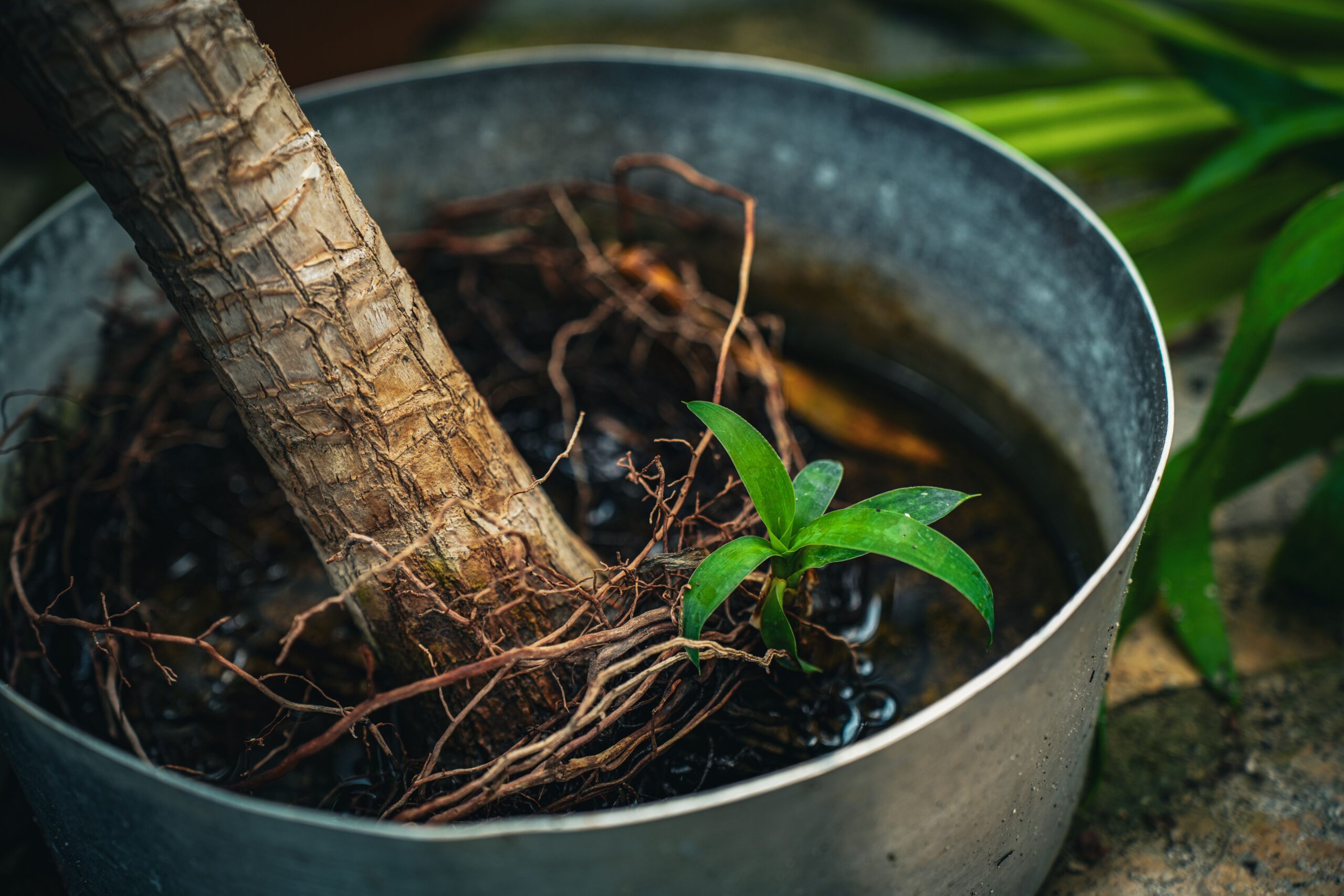
One of the easiest mistakes to make is judging moisture by how the top of the soil looks.
The surface can dry quickly while the soil around the roots is still moist. Watering again too soon can leave the deeper root zone saturated, while frequent light watering may only wet the upper layer.
Instead, check moisture below the surface before reaching for the watering can. When your plant does need water, water thoroughly enough to reach the active root zone.
The goal isn’t to water more. It’s to make sure roots have access to moisture without keeping them constantly wet.
2. Make Sure Roots Can Breathe
Roots need oxygen to function.
In soil, oxygen occupies the small spaces between soil particles. When those spaces remain filled with water for too long, less air reaches the root zone.
That’s why drainage matters.
Containers should have adequate drainage, and growing media should allow excess water to move through rather than remaining saturated for long periods.
This is also why adding more water to a wilted plant isn’t always the right answer. If the root zone is already wet, another watering may make the conditions around stressed roots even worse.
3. Give Roots Room to Grow
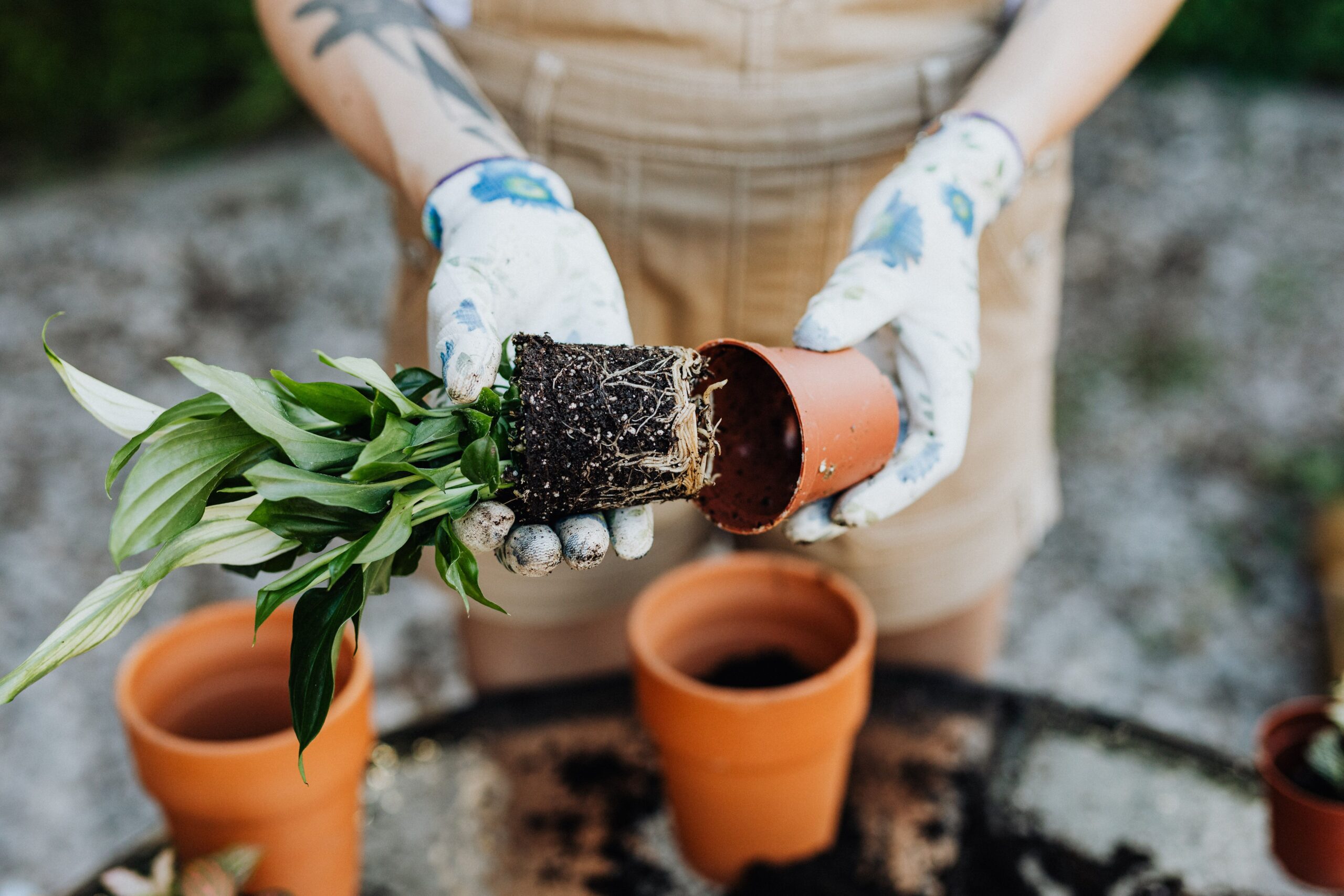
As plants grow above the surface, their root systems are developing below it too.
Eventually, container plants can outgrow the space available to them. Roots may begin circling the inside of the pot, become densely packed, or have difficulty accessing water evenly throughout the growing media.
When that happens, repotting into an appropriately sized container can give roots more room to expand.
Bigger isn’t always better, though. Moving a small root system into a dramatically oversized container can leave a large volume of growing media wet for longer than the plant can use it.
The goal is simply enough space for healthy, continued root development.
4. Pay Attention to Root-Zone Structure
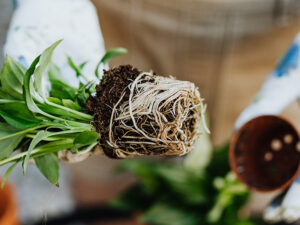
A root system needs a growing environment it can move through.
Heavily compacted soil or dense growing media can restrict root expansion while also affecting drainage and airflow. A suitable root-zone environment should support the plant while allowing roots, water, and oxygen to move through it.
Remember, roots are constantly exploring so give them somewhere to go.
5. Support the Environment Around the Roots
Healthy root care isn’t only about the roots themselves.
Moisture, oxygen, soil structure, available nutrients, and biological activity all influence the environment in which roots are trying to function.
Instead of responding to every plant problem by adding another product or changing several things at once, focus on keeping that environment balanced.
Check the root zone:
✓ Are the roots staying wet for too long?
✓ Is the soil becoming compacted?
✓ Does the plant have enough room to grow?
✓ Is the root zone repeatedly drying out completely?
Those questions can often tell you more than the leaves alone.
6. Think About Root Health Before Your Plant Is Stressed
This may be the most important habit of all.
Most gardeners start thinking about roots after something goes wrong—when leaves turn yellow, growth stops, or a plant struggles after transplanting.
But healthy roots are much more useful as a foundation than a rescue plan.
Building a strong root system while a plant is actively growing gives it a better starting point when conditions become less predictable. Heat, transplanting, changes in watering, and other environmental stresses can still affect the plant, but an established root system gives it more resources to work with.
Healthy Root Checklist
✓ Keep moisture consistent without keeping roots constantly saturated
✓ Make sure excess water can drain
✓ Give roots access to oxygen
✓ Avoid heavily compacted growing media
✓ Give roots enough space to develop
✓ Support a balanced root environment
✓ Check below the surface before reacting to symptoms
That’s the bigger shift in plant care.
Instead of constantly asking how to fix a struggling plant, start asking what you can do today to help its roots stay healthy tomorrow.
Supporting Healthier Roots with Thryve Roots
Once you start looking at plant care from the roots up, the focus shifts from simply responding to what you see above the surface to supporting the environment where roots grow and function.
That’s the idea behind Thryve Roots.
Thryve Roots is an OMRI Listed® organic soil amendment designed to support the root-zone environment and the biological activity within it. Rather than functioning as a fertilizer, it is intended to complement the fundamentals of healthy root care, including appropriate moisture, oxygen, drainage, and space for roots to develop.
Because there isn’t one product or quick fix that creates a healthy plant overnight.
Strong plants are built over time by consistently supporting what’s happening below the surface.
Thryve Roots simply starts where we believe plant care should start: At the roots.
🌱 Thryve Tip:The best time to support healthy roots is before your plant gives you a reason to worry about them.
Frequently Asked Questions About Root Health
1. Why are my plant’s roots not growing?
Root growth can slow because of compacted soil, poor drainage, limited oxygen, inconsistent moisture, or lack of space. Check the root environment before adding more fertilizer.
2. Can a plant survive if most of its roots are damaged?
Sometimes, depending on how much healthy root tissue remains. If conditions improve, the plant may gradually produce new roots and recover.
3. Why is my plant wilting when the soil is still wet?
Wet soil doesn’t always mean roots are absorbing water properly. If the root zone stays saturated, reduced oxygen can stress the roots and contribute to wilting.
4. How can I tell if my plant is root-bound?
Look for roots growing through drainage holes, unusually fast-drying soil, slowed growth, or water running quickly through the pot. These are good reasons to inspect the root system.
5. Should I loosen roots when repotting a plant?
Only if they’re densely packed or circling the pot. Gently loosen the outer roots rather than aggressively pulling apart healthy growth.
6. Why are my plant’s roots brown but not mushy?
Brown roots aren’t always unhealthy. Firm roots without a foul smell may simply be older, while soft, mushy, or deteriorating roots are more concerning can be signs of root rot.
7. How long does it take for new roots to grow after repotting?
It varies by plant, season, and growing conditions. Instead of disturbing the plant to check, watch for stable growth and healthy new foliage.
8. Can a plant have healthy leaves but unhealthy roots?
Yes. Root problems can begin before visible symptoms appear above the surface, which is why good root care matters even when a plant looks healthy.
The Bottom Line
It’s easy to judge a plant by what’s happening above the surface. Green leaves, new growth, flowers, and fruit are what we notice first.
But what happens above the surface depends heavily on the system supporting it below.
Root health is about more than responding when something goes wrong. It’s about creating a root-zone environment with the moisture, oxygen, space, and support roots need to continue growing and functioning well.
So the next time something looks wrong above the surface, don’t just ask what the leaves need. Ask what’s happening at the roots.
Want to Understand Your Roots Better?
Root problems are easier to manage when you know what to look for. Our FREE Healthy Roots Handbook gives you a practical guide to spotting root stress, troubleshooting common problems, and building healthier plants from the roots up.
Already part of the Thryve Roots Squad? Check your inbox — your copy is waiting for you.
Healthy Plants Begin with Healthy Roots!

Be the first to comment